
We get called out to a lot of back yards that have had money spent on them and still don't get used. Usually nothing has failed. The turf is fine, the patio is fine — they just weren't planned together, so the space doesn't work as one thing. Here's what to settle first.
Start with the levels, not the surfaces. If your yard falls away from the house, as most metro Atlanta lots do, then the first real decision is where the flat area is going to be and what holds it there. That's a retaining wall or a terrace, and it has to go in before the turf and before the patio — because cutting one in afterwards means tearing up both. Getting the grade right first is the single thing that most changes what a yard costs over its life.
Second, work out where the water goes. Georgia rain arrives all at once. Every hard surface you add — patio, wall, turf base — changes where a few thousand gallons ends up, and 'toward the house' is the default answer if nobody plans otherwise. Drainage is cheap while the ground is open and expensive once it isn't.
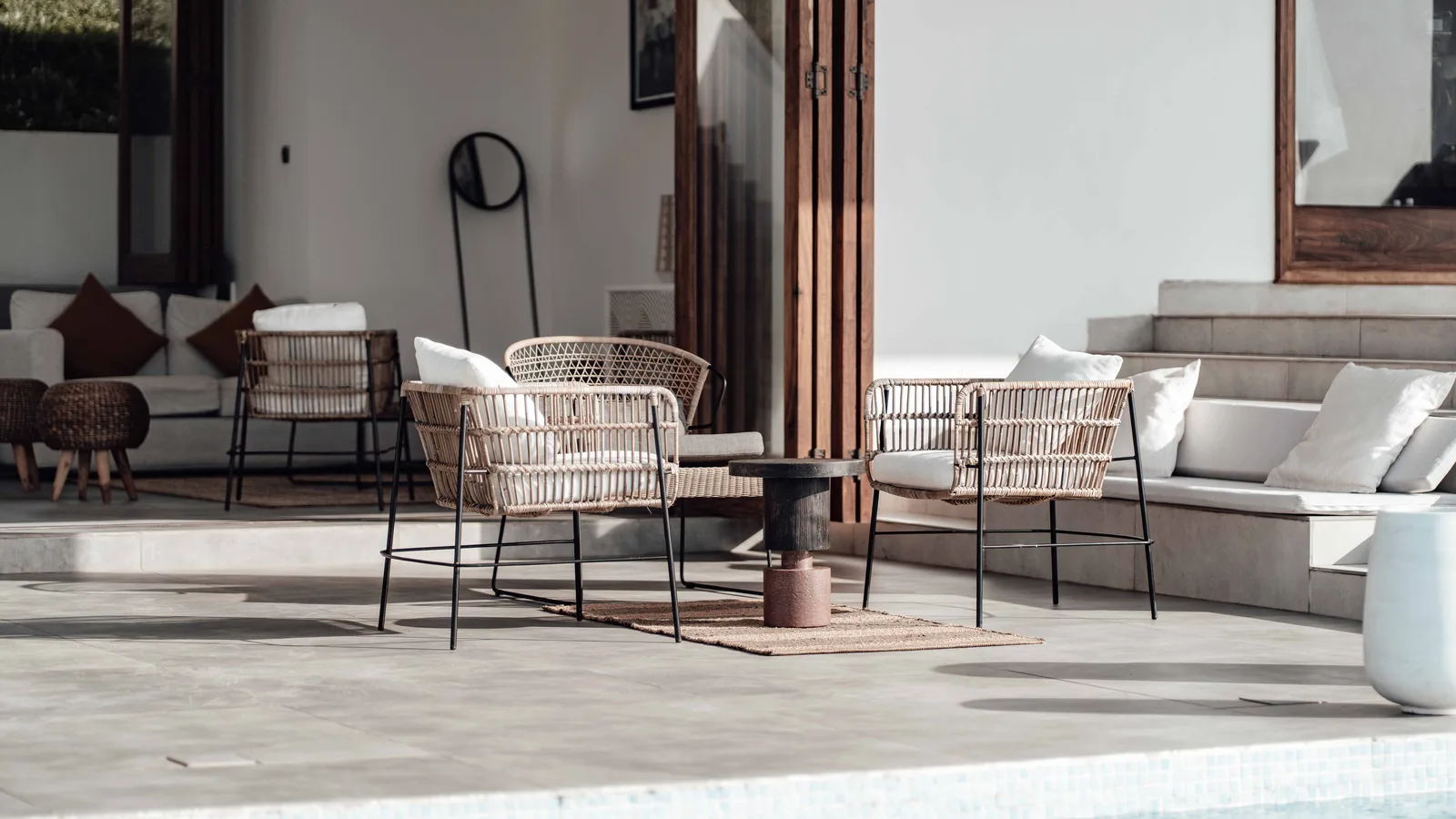
Third, size the patio around the furniture, not the budget. A six-seat dining table needs roughly a 12-by-12 foot area once you account for chairs pulled back and someone walking behind them. A lounge setup around a fire pit wants more like 14 feet across so the seating ring isn't crowding the fire. Sketch the furniture you actually own onto the plan. A patio sized by budget rather than by furniture is the most common reason one goes unused.
Fourth, decide about fire early, because it changes the build. A fire pit or an outdoor fireplace is what keeps a Georgia backyard in use from October through April, which is a long stretch of genuinely good evenings here. Adding one later means cutting into a finished patio and trenching a gas line through a surface you just paid for. If there's any chance you'll want one, we'd rather run the gas sleeve now and cap it. It costs very little during the build and a lot afterwards.
Fifth, run the lighting conduit before anything goes down. Low-voltage sleeves under the patio, wall lights built into a seat wall as it's stacked, a couple of spare runs to the beds. It's inexpensive during construction and awkward and ugly to retrofit — and lighting is what doubles a yard's usable hours, because an unlit backyard effectively closes at dusk.
A couple of technical points worth knowing while you're planning. A patio has to slope — about a quarter inch per foot away from the house — or water will sit on it and eventually find your foundation. It should look level to the eye and absolutely should not be. And keep the finished surface a couple of inches below any door threshold, so heavy rain has nowhere to back up into the house.
The last thing is ordering. Demolition, grading and drainage first. Walls next. Then patio and fire feature. Turf last, because it's the surface you least want a wheelbarrow run across. Done in that order nothing gets damaged and nothing has to be redone; done out of order you pay for parts of it twice.
Planning a whole back yard? Call Ricky Ricardo Professional Turf at (678) 900-8347. We'll walk it with you, mark the levels out on the ground, and give you the scope in writing before anything starts.