Almost every turf estimate we give starts with the same question: why not just re-sod it? It's a fair question, and the honest answer is that sod is much cheaper up front. What it isn't, in most metro Atlanta yards, is permanent — and that's where the comparison actually gets decided.
Start with what grass needs here. Fescue wants shade and cool weather and gets neither in July, so it thins out every summer and has to be overseeded every fall. Bermuda wants full sun and goes dormant brown from November to April, which is half the year. Zoysia splits the difference and costs the most. There is no warm-season grass that is green year-round in Georgia and no cool-season grass that survives August, which is why so many yards here end up with patches of all three and bare clay between them.
Then there's the clay itself. Georgia red clay compacts hard, drains slowly, and holds almost nothing a root wants. Grass planted straight onto it stays shallow-rooted, which is exactly why it browns out first in a dry spell and washes out first in a heavy one. Fixing that properly means amending soil across the whole lawn, which is not a one-time job either.
Artificial turf sidesteps both problems because it isn't growing. It's the same green in February as it is in July, it doesn't care whether it gets six hours of sun or none, and the base underneath it is built to drain rather than inherited from whatever the builder graded. That last part is the real work, and it's the part that separates an install that stays flat from one that ripples in two summers.
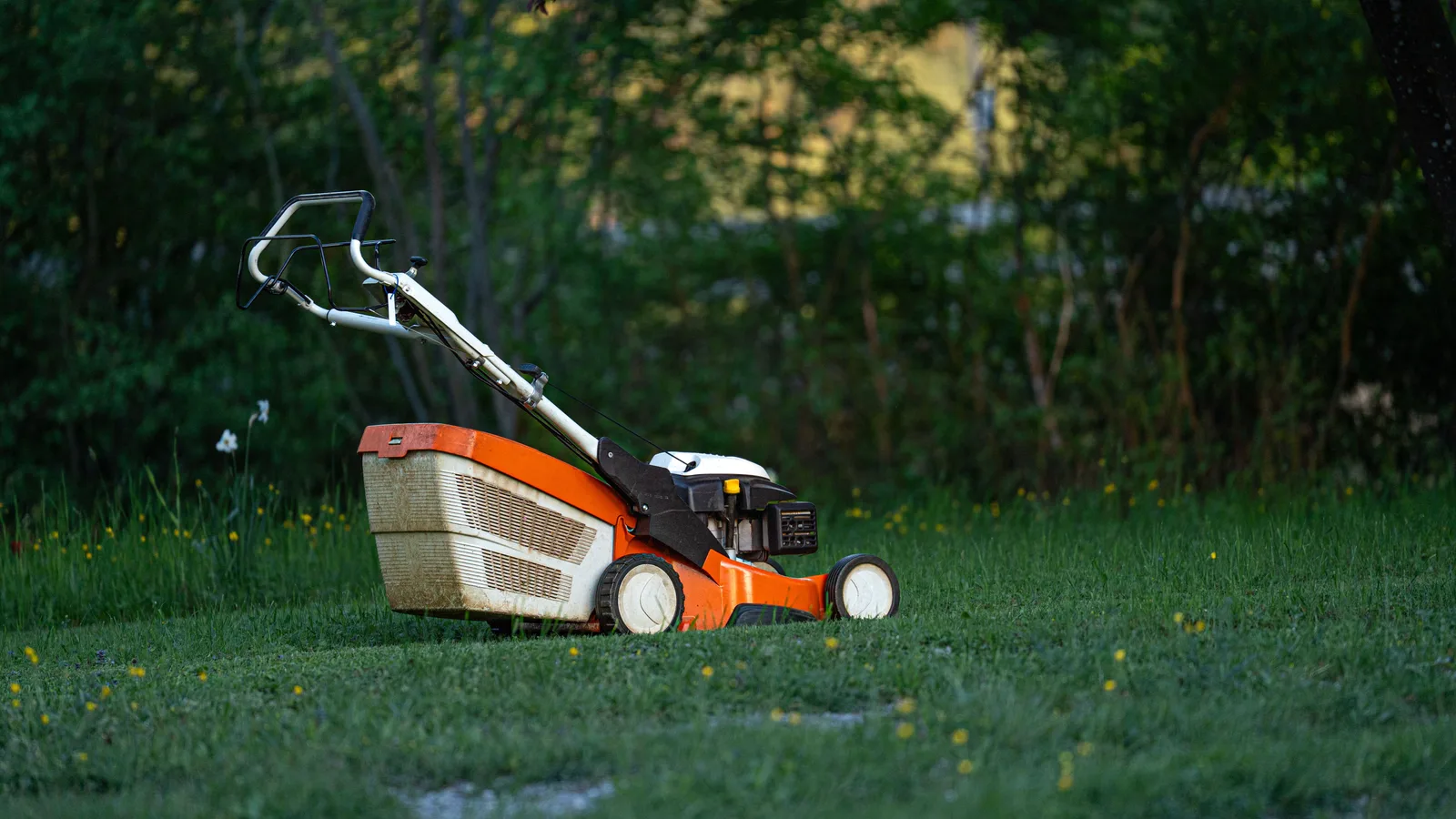
The running costs are where the numbers turn. A natural lawn in this climate means mowing from April through October, fertilizer and pre-emergent, overseeding in the fall, irrigation through the dry weeks, and re-sodding whatever didn't make it. Turf means rinsing it down now and again, clearing leaves, and having the infill topped up and the pile brushed every year or two. Over a decade the gap is substantial, and it's the reason most of our customers say they wish they'd done it sooner.
Where natural grass genuinely wins is up-front cost and, for some people, feel. Real grass is cooler underfoot in direct sun, it smells like grass, and if you have a large open lot in full sun with good drainage, a bermuda lawn can look excellent for a fraction of the money. We'll tell you that on site if it's true of your yard.
Turf also wins decisively in a few specific situations. Deep shade, where nothing will grow. Dogs, which wear a natural lawn to bare dirt and mud within a season. Small in-town yards, where the cost of the install is low and the yard is visible from every window. And slopes, where turf holds the surface instead of washing down it.
Our rule of thumb: if you have full sun, a big lot, and no dogs, sod is defensible. If you have shade, pets, kids, a small yard, or you've already re-sodded once and watched it fail, turf costs more once and then stops costing you.
Want a straight answer for your specific yard? Call Ricky Ricardo Professional Turf at (678) 900-8347 for a free on-site estimate anywhere from Marietta to Decatur. We'll tell you if sod is the smarter call for your situation.